

The scientific and expert seminar "The Volga-Caspian Macroregion: Natural Systems and Sustainable Development," dedicated to discussing the relationship between the Volga and the Caspian Sea and the consequences of modern environmental changes, was held on February 18, 2026, at the Central Headquarters of the Russian Geographical Society in Moscow. The key event of the seminar was the presentation of two fundamental encyclopedic publications—the three-volume "Volga: An Educational Encyclopedia" and the four-volume "Caspian Region: An Encyclopedia."
The presented encyclopedias, the result of many years of interdisciplinary research, offer a comprehensive description of the Volga-Caspian space within the "river-sea-region" framework. The three-volume "Volga: An Educational Encyclopedia" reveals the Volga as the natural, historical, cultural, and socioeconomic axis of the country, while "The Caspian Region: An Encyclopedia" (4 volumes) expands the discussion to include coastal areas, the international dimension, and key processes in the Caspian Basin.
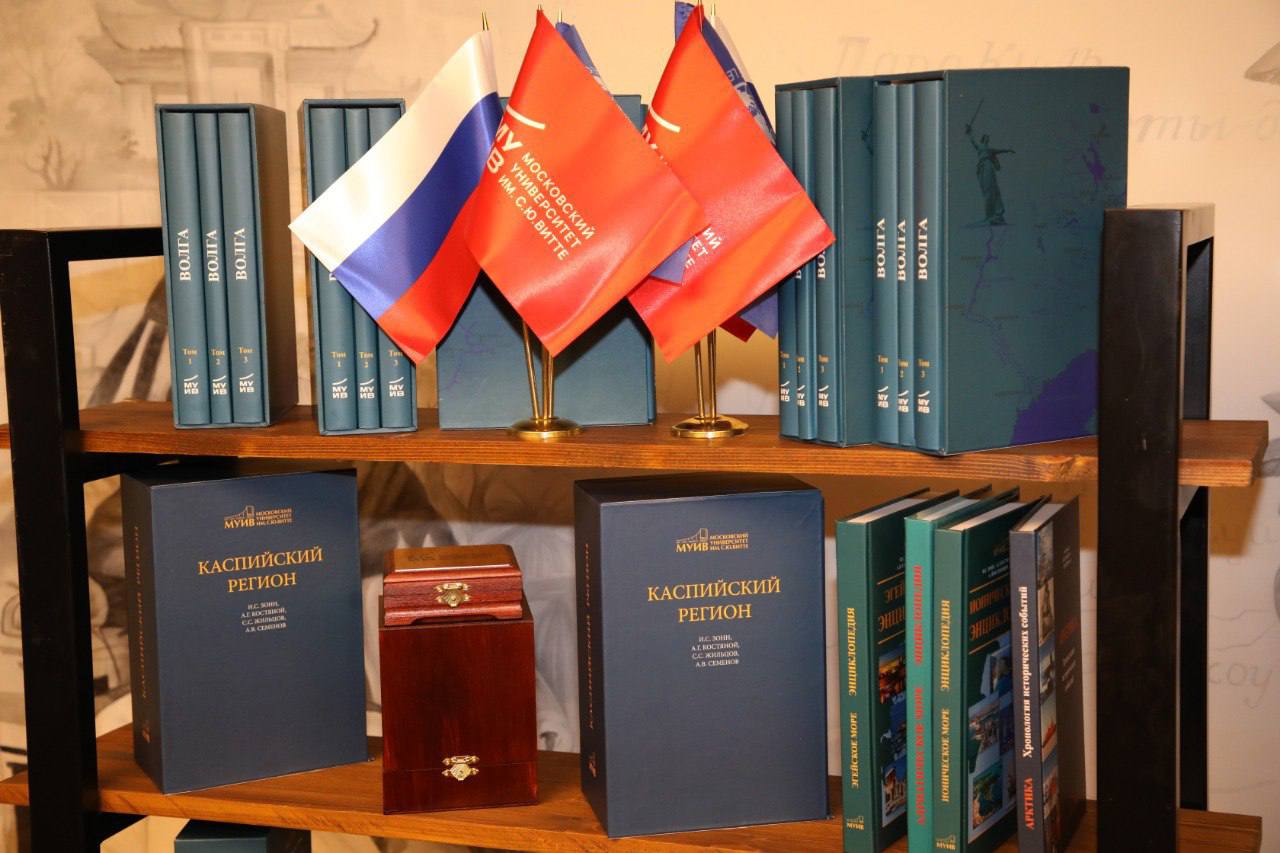
It was the encyclopedic format that became the central "assembly point" of the seminar: it allowed to connect a fundamental scientific agenda with the tasks of education, expert dialogue and practical solutions for the sustainable development of the macro region.
The presentation of the encyclopedias was accompanied by presentations by their authors: A.V. Semenov, Rector of Witte Moscow University; S.S. Zhiltsov, Head of the Department of Political Theory at the Diplomatic Academy of MGIMO University under the Ministry of Foreign Affairs of the Russian Federation; and A.G. Kostyany, Chief Researcher at the Laboratory of Experimental Ocean Physics at Shirshov Institute of Oceanology of the Russian Academy of Sciences. Specifically, Andrey Kostyany presented scientific assessments of the Caspian Sea level dynamics and the factors influencing its changes.
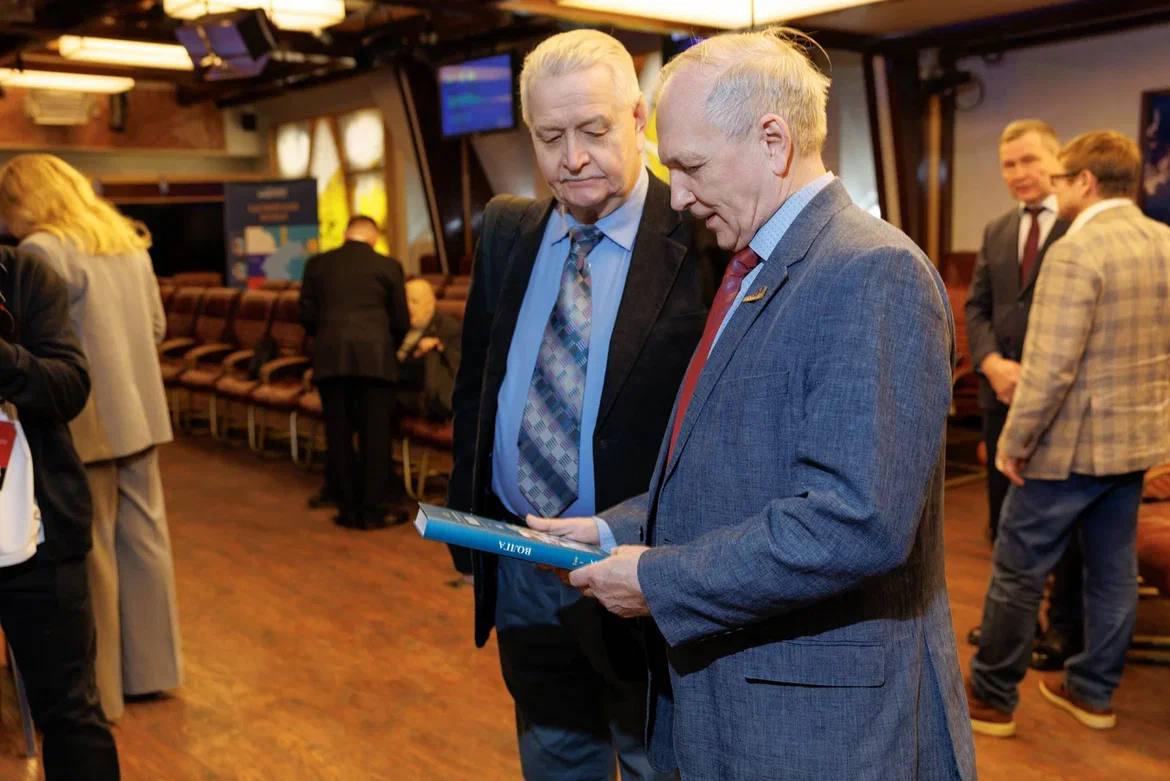
The seminar was attended by staff from Shirshov Institute of Oceanology of the Russian Academy of Sciences, Obukhov Institute of Atmospheric Physics of the Russian Academy of Sciences, the Institute of Geography of the Russian Academy of Sciences, the Institute of Water Problems of the Russian Academy of Sciences, the Moscow Institute of Physics and Technology, the Moscow Institute of Geodesy, and Cartography, the Ministry of Foreign Affairs of the Russian Federation, the Diplomatic Academy of the Ministry of Foreign Affairs of the Russian Federation, Tver State University, Astrakhan State Nature Biosphere Reserve, Samara State Technical University, and other organizations.
Kirill Litvinov, Deputy Director of the Astrakhan State Biosphere Reserve, outlined the ecological and biological consequences of changes for the Volga Delta and its ecosystems.
Elena Dmitrieva of Samara State Technical University presented a socioeconomic development perspective for the Volga-Caspian macroregion, emphasizing the need to align growth strategies with natural constraints.
A special emphasis was placed in the presentation by Igor Yasinsky, a representative of the Vodohod company, on the Volga as a space for cultural and educational tourism and the responsibility of business, which expanded the discussion to the humanitarian and applied aspects of preserving river heritage.
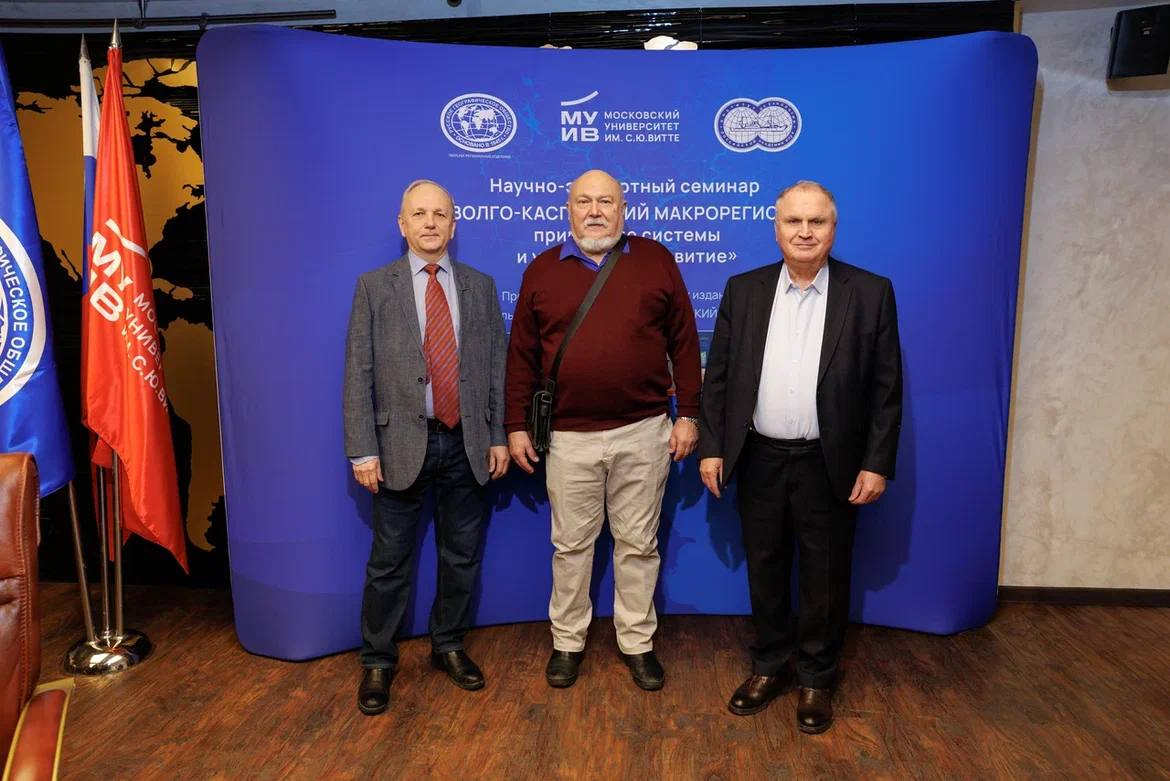
Following the seminar, participants identified priority areas for the development of the Volga-Caspian basin: logistics, water strategy, ecology, and industrial processing. The encyclopedia sets were donated to the Russian Geographical Society library, the Russian Academy of Sciences collections, and relevant organizations.
Holding the seminar at the Russian Geographical Society's venue underscored the continuity of the national geographic tradition: for decades, the Russian Geographical Society has united the scientific community, supported expeditionary research, mapping, and geographical education, fostering a culture of systematic understanding of the country's major natural complexes.
